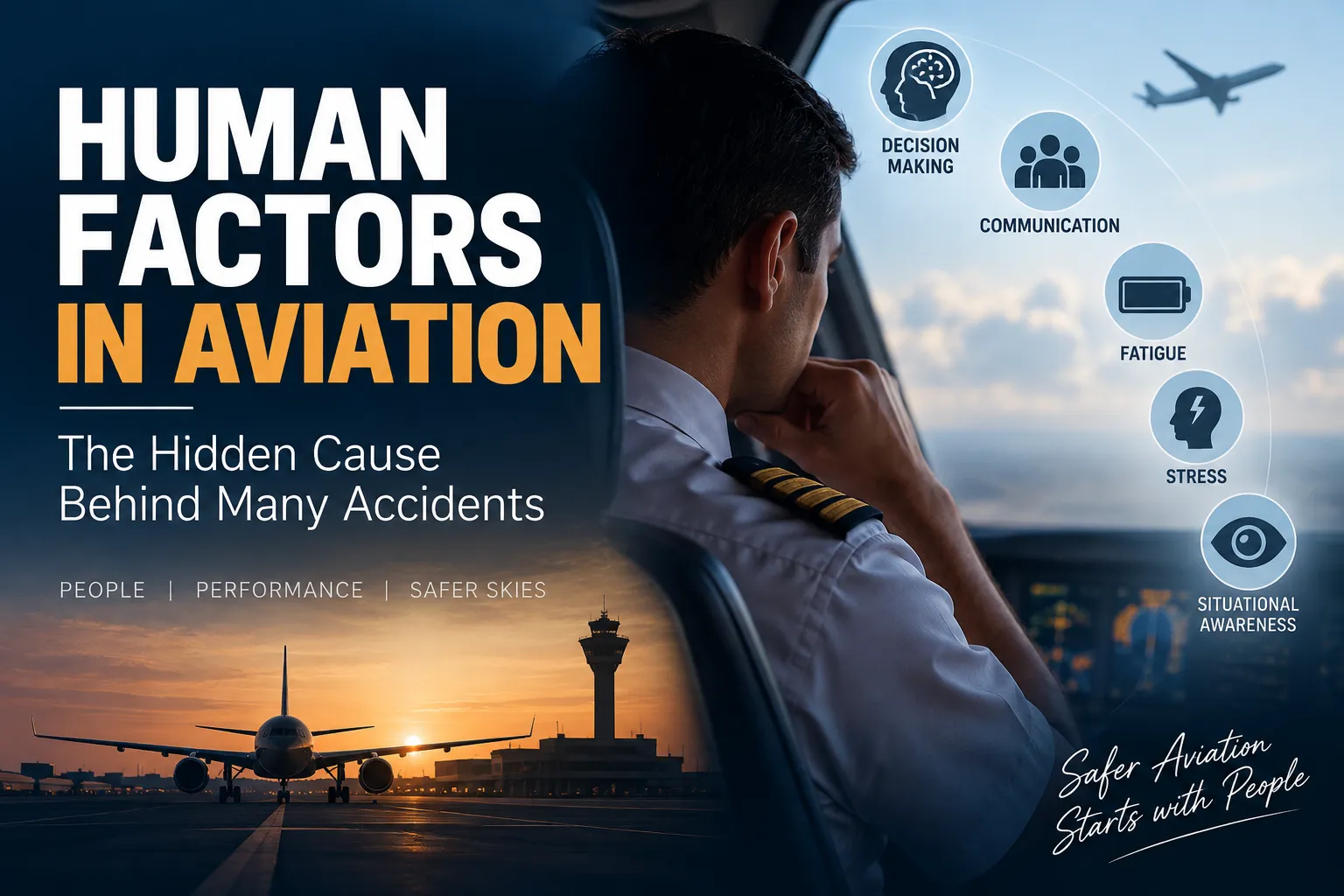
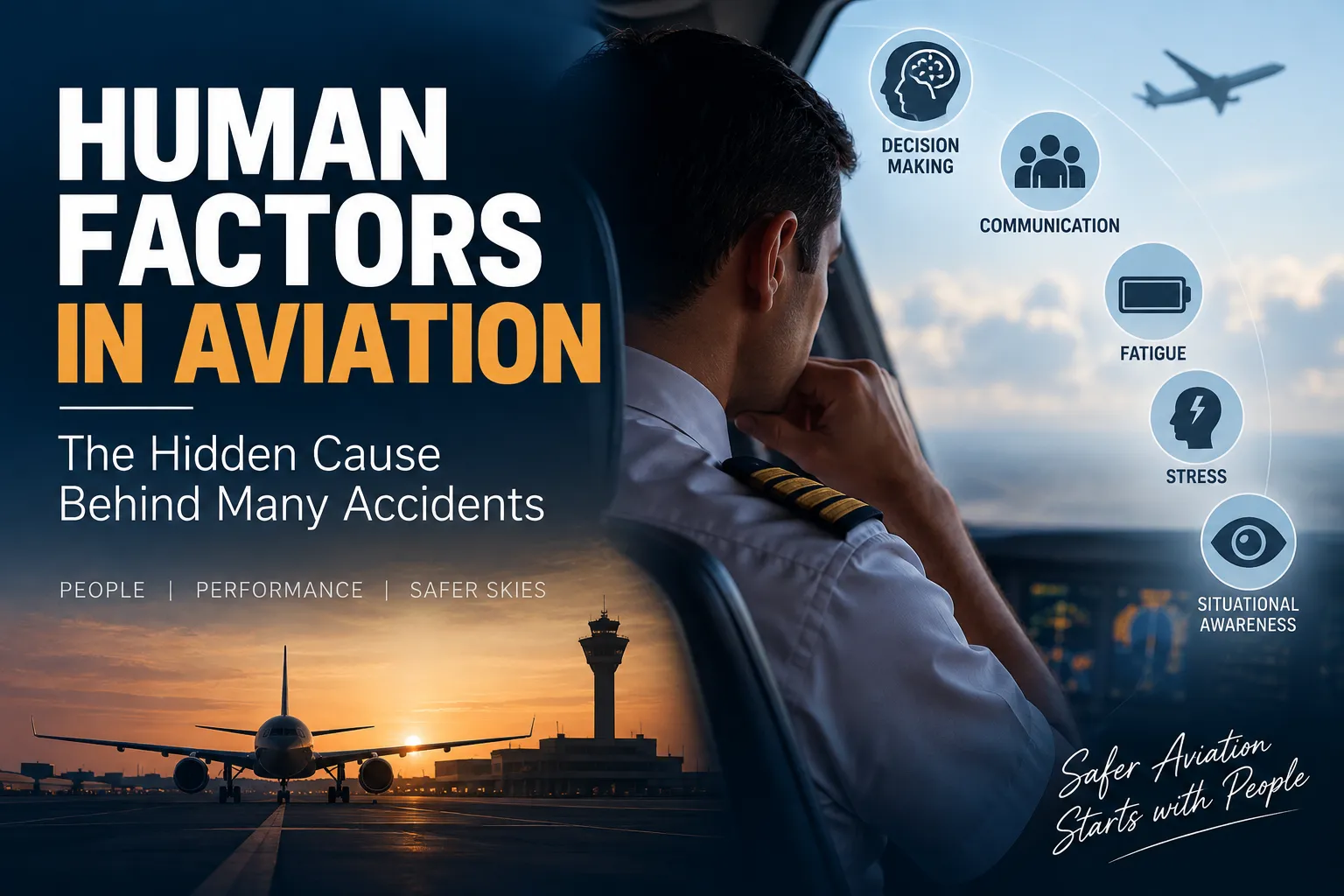
Human Factors in Aviation: The Hidden Cause Behind Many Accidents
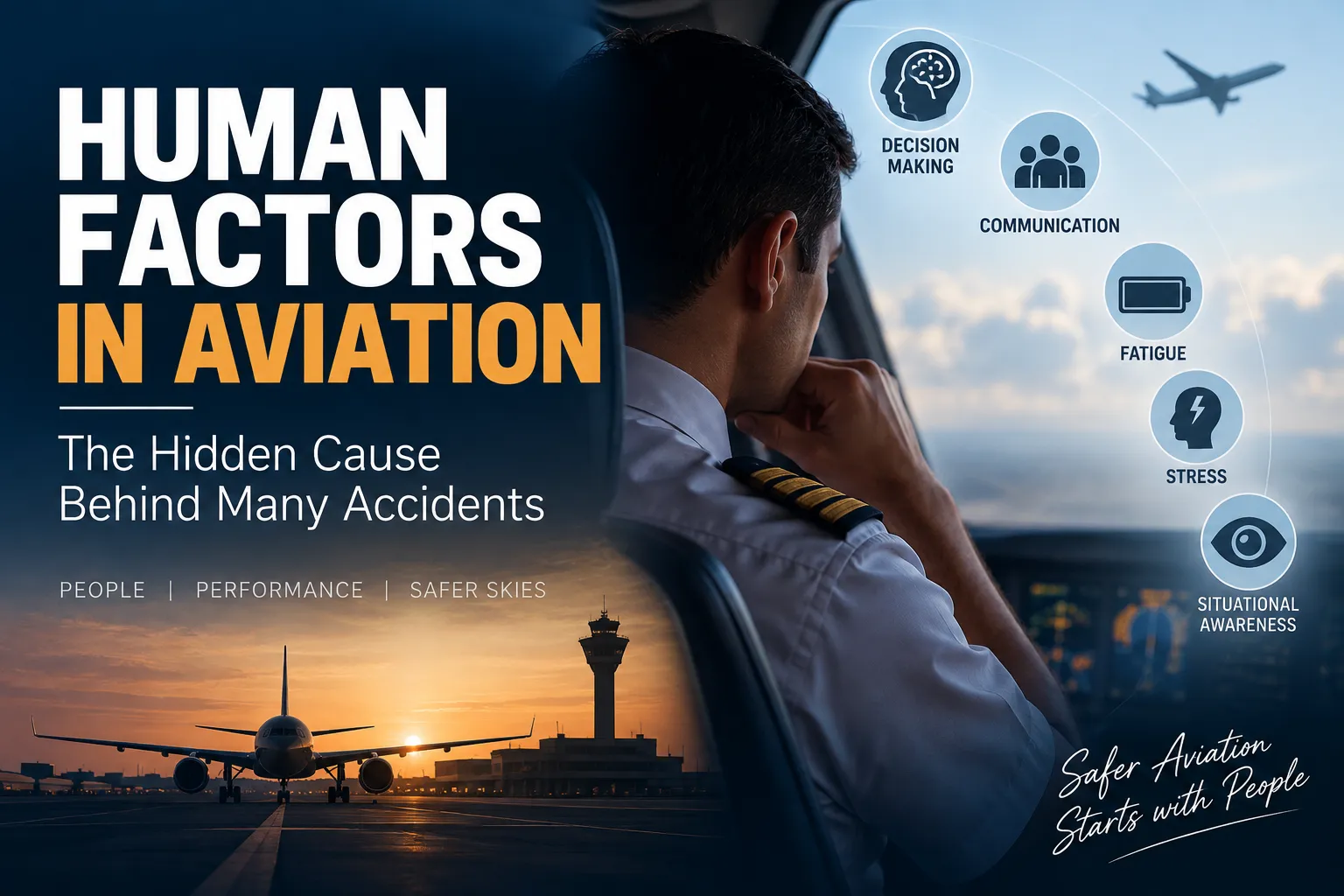
Human Factors in Aviation: The Hidden Cause Behind Accidents
When we think about aviation safety we often focus on aircraft technology, weather conditions, mechanical failures or air traffic control. However the important element behind safe flight operations is the human factor. Human Factors in Aviation refers to the way people interact with aircraft, technology, procedures, other people and their working environment. Human Factors in Aviation reminds us that every person involved in aviation can affect safety.
Pilots, cabin crew, air traffic controllers, engineers, dispatchers and ground staff all play a role, in maintaining aviation safety. With advanced aircraft and sophisticated systems the human factor can significantly influence the outcome of an operation.
What Are Human Factors in Aviation?
Human factors mean the mental and behavioral parts that shape how people in aviation carry out their jobs. Human factors such, as fatigue, stress, workload, communication, decision‑making, situational awareness, training and teamwork can affect the ability of individuals to work safely and effectively.
Understanding these factors is essential because causes of aviation accidents are rarely limited to a single mistake. An incident may result from a combination of human, technical, organisational, and environmental factors.
Human Error and Aviation Accidents
Human error does not always mean someone was not doing their job properly. People who work in aviation are in environments that're very complicated. They often have to make choices when things are changing all the time.
For example being tired can make it harder to pay attention. Having much work to do can make it harder to make good choices. Not talking clearly can lead to information being missed. These things can cause mistakes that impact flying.
This is why looking at the causes of aircraft accidents means more than just thinking about what one person did. It also means looking at the situation that led to the mistake.
Importance of Human Factors in Aviation Safety
The importance of human factors in aviation safety is about finding problems before they lead to crashes or big problems. By knowing how people act and react in situations aviation companies can create better rules, training, ways to talk with each other and ways to stay safe.
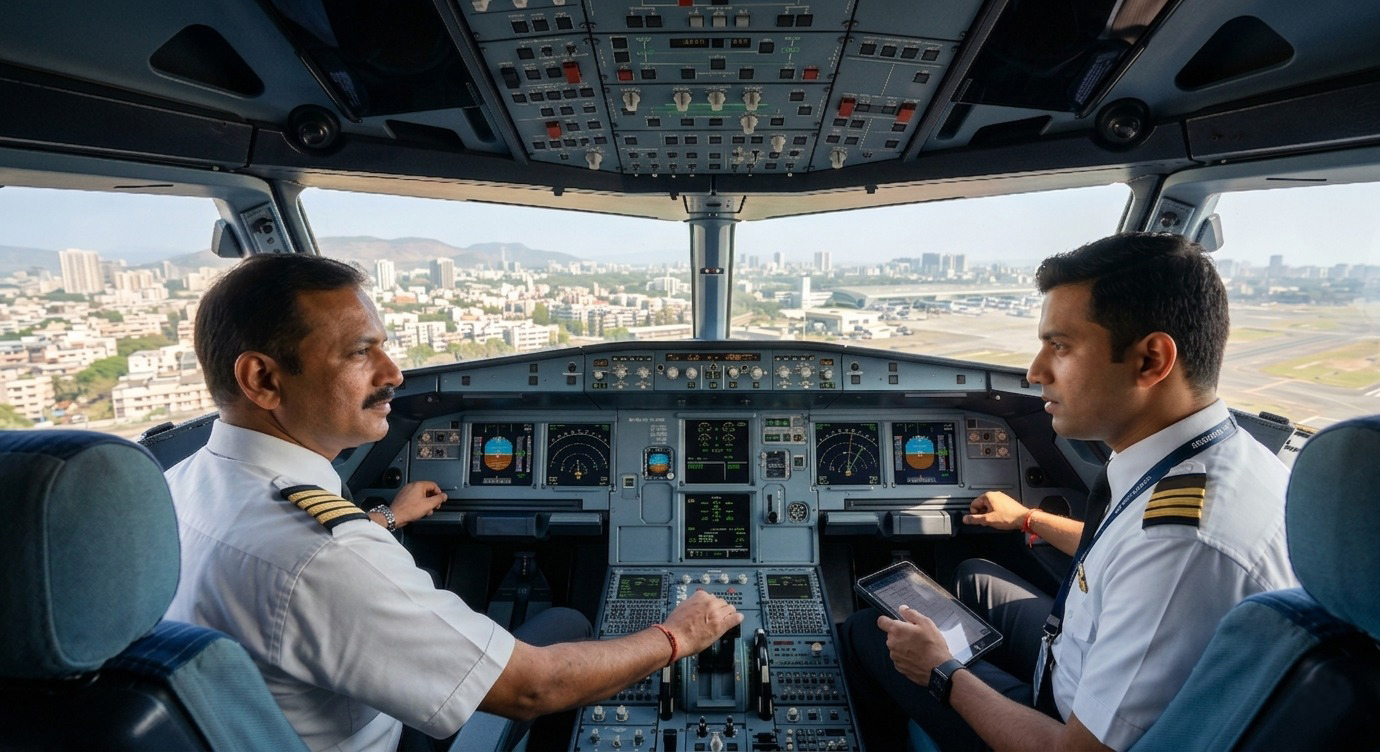
Crew Resource Management (CRM) is one example. It is, about how people talk, work together take charge make choices and know what is happening around them. Good CRM helps pilots see dangers share what they know and make choices together.
Managing tiredness is another part. When people are too sleepy they react slower can't focus, forget things and make choices. Keeping tiredness under control is very important to make sure people do their job well while flying.
How Can Human Error Be Reduced?
Human error cannot be fully removed, but it can be made likely and less harmful. This can be done by providing training using clear standard operating procedures encouraging safety reporting applying Crew Resource Management (CRM) managing fatigue and building strong safety cultures.
Aviation organisations should also support professionals in reporting hazards and mistakes. They need to feel safe doing so without fear of punishment. When mistakes are. Studied organisations can find problems in their systems and stop similar issues from happening again.
Conclusion:
Human Factors in Aviation shows that aviation safety is not about machines—it is also about people. Knowing the limits of humans and improving communication, teamwork, decision-making and situational awareness can make a difference in preventing aviation accidents.
Even as aviation becomes more advanced in technology understanding performance stays important. The best aviation safety systems use technology along, with well-trained, alert and supported professionals.
Take the Next Step in Aviation Safety
Understanding human factors is an essential part of building safer aviation operations. If you want to develop professional knowledge in Human Factors, Aviation Safety, Accident Prevention and Investigation, explore the specialised training programmes offered by IAAS.
Explore IAAS Aviation Safety & Human Factors Courses →
FAQs
1. What are human factors in aviation?
Human factors in aviation are the psychological and behavioural elements that affect how aviation professionals carry out their duties and interact with aircraft, systems, procedures and other people. I see factors as the invisible forces that shape every flight.
2. Why are human factors important in aviation safety?
Human factors help aviation organisations understand limits and lower risks connected to fatigue, stress, workload, communication, decision making and other performance issues. I believe that without recognising factors safety would be much more fragile.
3. How does human error cause aviation accidents?
Human error can lead to accidents when poor communication, fatigue, lack of awareness or wrong decisions meet operational or technical conditions. I think every mistake starts with a factor that was not managed well.
4. How can human error be reduced in aviation?
Human error can be cut down through training Crew Resource Management, clear operating procedures, fatigue control, safety reporting, risk checks and a strong safety culture. I feel that each of these practices builds a shield against error.
5. How do human factors affect pilot performance?
Human factors such, as fatigue, stress, workload, communication, situational awareness and decision making directly shape a pilots performance and ability to handle situations. I know that a pilot who is aware of these factors can navigate challenges with confidence.
People Also Ask
1. What are the main human factors in aviation accidents?
The main human factors in aviation accidents often involve fatigue, stress, high workload problems with communication, poor decision-making, low situational awareness and weak teamwork. These issues can lead to mistakes that affect flight safety.
2. What causes errors in aviation?
Human error in aviation can happen due to tiredness, distractions, heavy workloads, stress, unclear or missing procedures, communication breakdowns, not enough training and tough flying conditions. All of these can lead a person
to make a mistake.
3. What are the 12 human factors in aviation?
The 12 human factors in aviation are often called the "Dirty Dozen." They include complacency, distraction, fatigue, pressure, stress, poor communication, lack of teamwork, limited knowledge, lack of resources, lack of assertiveness, low awareness and poor safety norms.
4. What is Crew Resource Management (CRM), in aviation?
Crew Resource Management or CRM is a training method used in aviation to improve how crew members work together. It focuses on communication, stronger teamwork, leadership smarter decision-making and using all resources effectively during flights.